The most useful soft plastic in the box is the one you can keep fishing as conditions change. These three rigs cover the zones most anglers face without turning the deck into a tackle-store aisle.
1. JIGHEAD — DIRECT CONTACT AND DEPTH
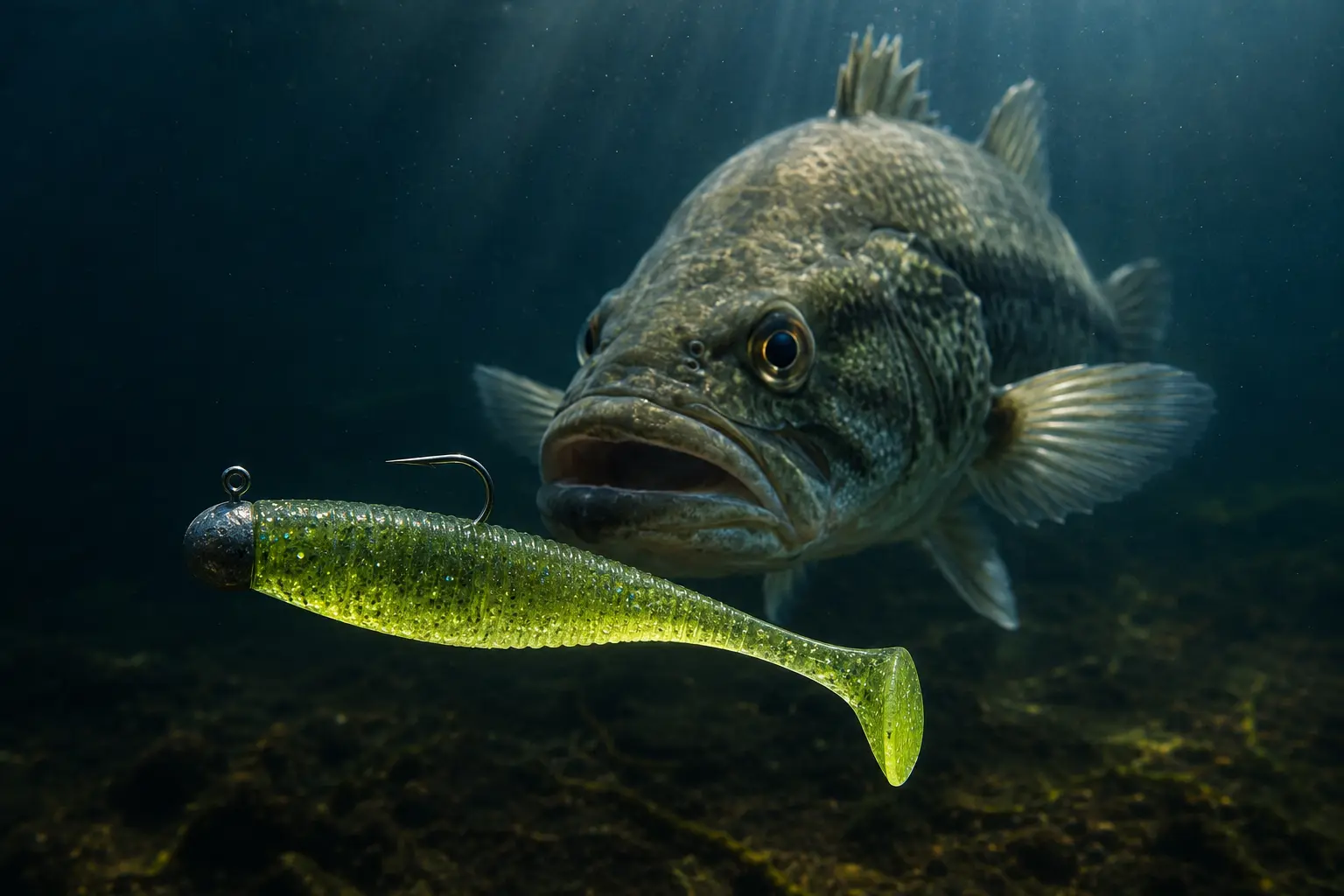
A jighead gives the bait a clean line pull, reliable hook exposure, and the most precise depth control. It is the starting rig for open water, riprap, current seams, ledges, and fish holding below the surface.
Choose the lightest head that keeps contact with the zone. A lighter head glides and hangs longer; a heavier head reaches depth and transmits rock or bottom. Thread the bait perfectly straight so the tail tracks without rolling.
- Cast past the target and count down before retrieving.
- Use a steady roll for suspended fish.
- Tick rock or bottom, then pause in current seams.
- Increase weight before increasing speed when fish are deep.
2. WEIGHTED EWG — CLEAN THROUGH COVER
A belly-weighted extra-wide-gap hook keeps the point protected and lets the bait move through grass, docks, laydowns, and shallow cover. The weight stays close to the bait, creating a natural horizontal fall instead of a nose-first dive.
Center the hook through the nose, rotate the bait, and measure exactly where the point should re-enter. The body should remain straight and relaxed. Skin-hook the point for clean travel, but leave enough room for the plastic to collapse during the strike.
- Use lighter weight over submerged grass.
- Add weight when wind or depth prevents contact.
- Pause beside holes, posts, and outside grass edges.
- A controlled reel-and-stall retrieve keeps the bait in the strike zone.
3. UNDERSPIN — FLASH FOR SEARCHING
An underspin adds a compact flash beneath the bait without changing its familiar profile. It is especially effective around suspended fish, wind-blown points, lightly stained water, and open-water forage.
The blade needs enough speed to turn, but the bait should not race out of the zone. Begin with a steady retrieve, then add short stalls. The blade drops and the paddle tail changes rhythm, creating two signals from one small speed adjustment.
- Silver blades fit shad and clear-to-stained water.
- Gold or darker flash can stand out in low light and tannic water.
- Keep the trailer straight so the blade and tail work independently.
- Use a compact profile when fish are feeding on small forage.
LET THE WATER PICK THE RIG
Do not choose the rig because it is already tied on. Choose it based on the lane the bait has to travel. Open water and rock favor direct control. Grass and cover demand a clean weedless path. Suspended fish and scattered forage reward extra flash.
Once the rig matches the water, color and speed become smaller adjustments instead of attempts to rescue the wrong presentation.
One paddle tail can cover most of a day when the rig matches the water. Keep one jighead, one weighted EWG, and one underspin ready, then let depth and cover tell you which one gets the next cast.